Banana

Musa acuminata · Banana family (Musaceae)

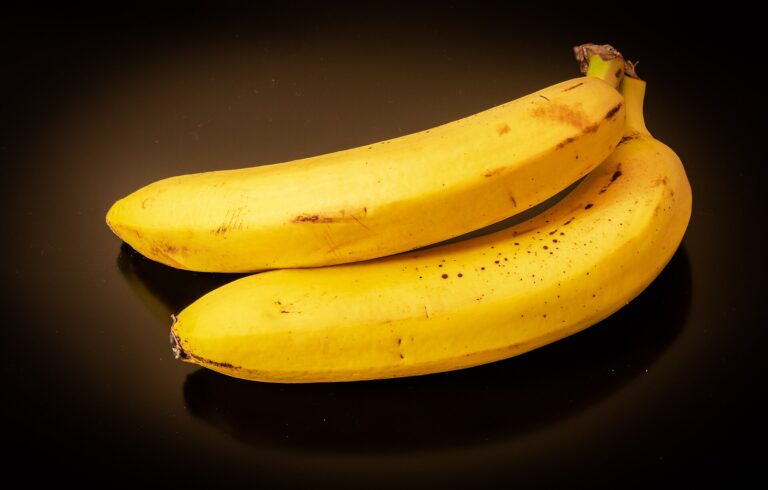
Hi, I'm Banana! I come in my own yellow wrapper, ready to go!

Banana
Image: Krzysztof Golik · CC BY-SA 4.0 · Wikimedia Commons

What does it help with?

  • Energy

    Bananas give you quick energy to run and play.

    🟢 Scientists are sure

  • Vitamins & good food

    Bananas give you potassium. It helps your muscles and heart work.

    🟢 Scientists are sure

  • Tummy & digestion

    In tests, little kids with runny poo got well faster with green banana food.

    🟡 Scientists think so

What do the colored dots mean?
  • 🟢 Scientists are sure Strong evidence (several good human trials)
  • 🟡 Scientists think so Some evidence (small human studies)
  • 🟠 Still being studied Early evidence (lab or animal studies only)
  • 🔵 Grandma's wisdom Traditional use (not scientifically confirmed)

How we grade evidence

Careful if…

For kids OK in normal food Pills, powders & oils: ask a grown-up first

Bananas are a perfect first food for babies — just mash them. Older kids can pack one in their school bag.

  • Kidney problems or stones

    ⚠️ Ask a doctor first

    People with weak kidneys may need to eat fewer bananas. Their doctor will tell them.

  • Allergies

    👀 Be careful

    Some people who are allergic to latex, like in balloons, are also allergic to bananas.

Natural does not always mean safe. Always ask a grown-up before trying something new, and a doctor or pharmacist before taking any supplement. Try the safety check →

What is it?

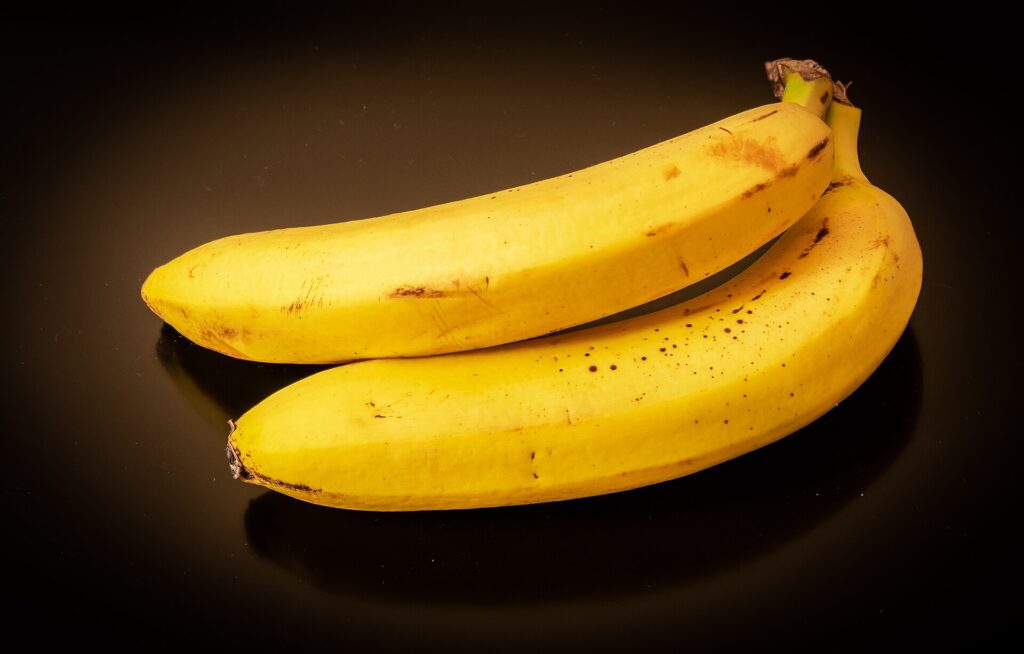
A banana is a long, soft fruit with a peel that is easy to open. Bananas grow in big bunches on a giant plant.

The banana plant looks like a tree, but it has no wood. It is really a giant herb! In Morocco, bananas grow in greenhouses near Agadir.

How people use it

In the kitchen

  • Eaten fresh, or mashed for babies.
  • Blended with milk into a banana smoothie, a Moroccan juice-bar favourite.
  • Baked into banana bread and cakes.

Traditional uses

🔵 Grandma's wisdom — not proven by science

  • Banana leaves are used as plates and food wrappers in many hot countries.

Home & garden

  • Banana peels can go on the compost heap.

Fun facts

  1. The banana plant is one of the biggest plants with no wood — a giant herb!

  2. Bananas grow pointing up toward the sun, not hanging down.

  3. A cluster of bananas is called a “hand”, and each banana is a “finger”.

Grow it yourself

  • Tricky
  • Lots of sun
  • Lots of water
  • Grows in a pot
  • About 1 to 2 years for a plant to make a bunch
  1. Get a small banana plant, called a pup, from a garden shop or a friend.
  2. Plant it in a big pot or a warm, sunny corner of the garden.
  3. Water it a lot in summer. Banana plants are thirsty!
  4. Protect it from wind and cold, which tear and burn the leaves.

💡 Each banana stem gives fruit only once. Then new baby plants grow from the bottom.

Quiz time!

Answer 3 questions. Get 2 right to win this plant’s badge for your garden!

  1. What is a banana plant, really?

  2. Which way do bananas grow on the plant?

  3. Which mineral are bananas famous for?

Your plant card

Print it, cut it out and collect them all!

Banana

Musa acuminata

Superpowers
Energy Vitamins & good food Tummy & digestion
Careful
Kidney problems or stones, Allergies
Growing
⭐⭐⭐

🤩 The banana plant is one of the biggest plants with no wood — a giant herb!

supplementsmorocco.com

For grown-ups: science, amounts & safety

Tap to open

General information, not medical advice. Talk to a doctor or pharmacist before using any herbal supplement — especially during pregnancy or breastfeeding, for children, before surgery, or if you take medicines. Medical disclaimer

What the research says

Use Evidence Details
Energy 🟢 Strong evidence (several good human trials) Per 100 g, raw banana provides 89 kcal and about 23 g of carbohydrate, including 12 g of sugars[1].
Vitamins & good food 🟢 Strong evidence (several good human trials) Per 100 g, raw banana provides 358 mg potassium, 0.37 mg vitamin B6 and 2.6 g fibre[1]; bananas are among the fruits listed as good potassium sources[2].
Tummy & digestion 🟡 Some evidence (small human studies) A 2024 meta-analysis of 9 randomised trials in 3,996 children aged 8 to 34 months found green banana foods, added to standard treatment, sped recovery from acute and persistent diarrhoea[3].

Who should be careful & interactions

  • ⚠️ Ask a doctor first Kidney problems or stones: People with kidney problems, particularly those on dialysis, should not eat too many potassium-rich foods such as bananas; a doctor may recommend a potassium-restricted diet[2]. Some heart and blood-pressure medicines (ACE inhibitors, ARBs, potassium-sparing diuretics) can also raise blood potassium[2].
  • 👀 Be careful Allergies: Banana is one of the foods most commonly linked with latex allergy (latex-fruit syndrome), along with avocado and chestnut[4].

Nutrition (per 100 g of raw banana (about 1 small banana))[1]

Energy 89 kcal
Carbohydrates 22.8 g
Sugars 12.2 g
Fiber 2.6 g
Protein 1.1 g
Potassium 358 mg
Magnesium 27 mg
Vitamin C 8.7 mg
Vitamin B6 0.4 mg

Names & identifiers

Scientific name
Musa acuminata
Also called
Cavendish banana, Bananas
Wikidata
Q132970

Sources

  1. Bananas, raw (FDC ID 173944) USDA FoodData Central · Database
  2. Potassium in diet MedlinePlus, National Library of Medicine (NIH) · Guideline
  3. Role of green banana consumption in the treatment of acute and persistent diarrhea in children: a systematic review and meta-analysis of randomized controlled trials European Journal of Pediatrics · 2024 · Research review · PubMed
  4. Managing latex allergies at home MedlinePlus, National Library of Medicine (NIH) · Guideline

✅ Reviewed by sm_owner on September 26, 2026.

Last updated September 26, 2026. How we write and check our pages

✏️ Suggest an edit

We only use this to improve the page. We never share it.