Garlic

Allium sativum · Onion family (Amaryllidaceae)

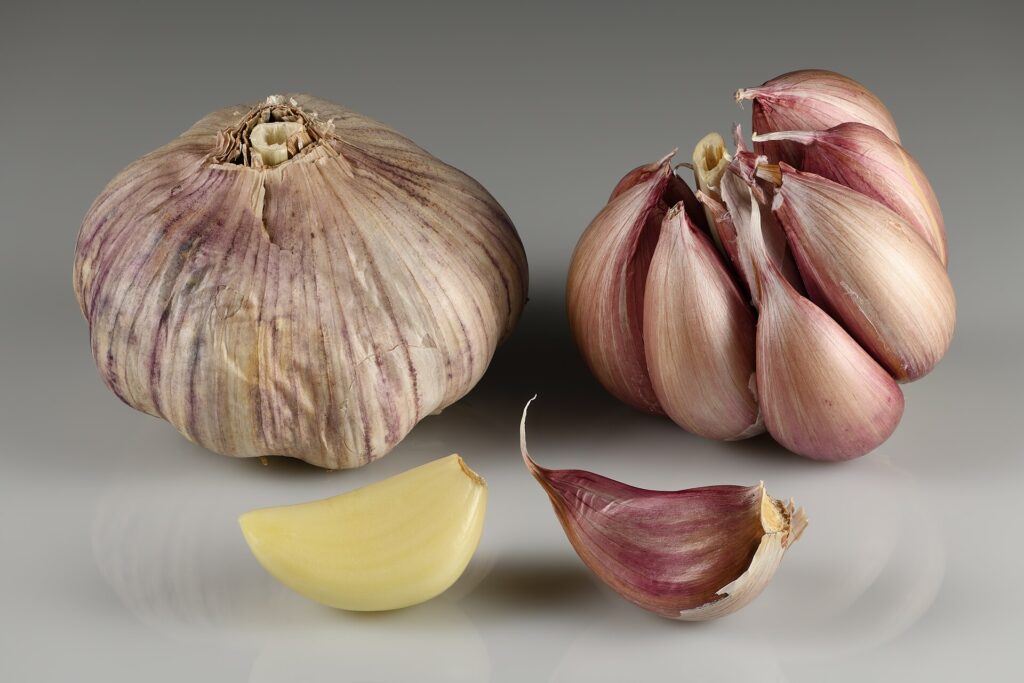
Hi, I'm Garlic! I'm small and a bit smelly, but cooks everywhere love me.

Garlic
Image: Ivar Leidus · CC BY-SA 4.0 · Wikimedia Commons

What does it help with?

  • Heart & blood vessels

    Garlic pills may lower cholesterol and blood pressure a little in grown-ups who have too much.

    🟡 Scientists think so

  • Blood sugar

    In grown-ups with diabetes, garlic pills may lower blood sugar Sugar from food that travels in your blood to give your body energy. a little.

    🟡 Scientists think so

  • Colds & coughs

    Many people eat garlic to avoid colds. Only one study checked this, so scientists are not sure.

    🟠 Still being studied

What do the colored dots mean?
  • 🟢 Scientists are sure Strong evidence (several good human trials)
  • 🟡 Scientists think so Some evidence (small human studies)
  • 🟠 Still being studied Early evidence (lab or animal studies only)
  • 🔵 Grandma's wisdom Traditional use (not scientifically confirmed)

How we grade evidence

Careful if…

For kids OK in normal food Pills, powders & oils: ask a grown-up first

Garlic cooked in family meals is fine for kids. Garlic pills are for grown-ups, and raw garlic should never be put on the skin.

  • Allergies

    ⛔ Avoid

    If garlic ever made you itchy or swollen, stay away from it.

  • Blood-thinning medicines

    ⚠️ Ask a doctor first

    Garlic pills can make bleeding last longer. People taking blood-thinning medicine must ask their doctor first.

  • Before surgery

    ⚠️ Ask a doctor first

    Before an operation, tell the doctor if you take garlic pills.

  • Pregnancy

    ⚠️ Ask a doctor first

    Garlic in food is fine for mums expecting a baby. Garlic pills need a doctor's OK.

If you have too much…

  • Smelly breath and body, and sometimes a sore tummy or gas.
  • Raw garlic left on the skin can burn it. Never tape garlic to your skin!

Natural does not always mean safe. Always ask a grown-up before trying something new, and a doctor or pharmacist before taking any supplement. Try the safety check →

What is it?

Garlic grows under the ground as a round bulb. The bulb is made of small pieces called cloves. Each clove is wrapped in thin, papery skin.

Raw garlic tastes hot and strong. When you cook it, it becomes sweet and soft. People have eaten it for thousands of years.

How people use it

In the kitchen

  • Crushed into tagines, sauces, soups and marinades.
  • Roasted whole until soft and sweet.

Traditional uses

🔵 Grandma's wisdom — not proven by science

  • Eaten in many cultures to stay strong in cold weather.

Home & garden

  • Some gardeners plant garlic between other plants.

Fun facts

  1. Garlic smells strong only after you cut or crush it. That is when its smelly natural substances are made.

  2. You can grow a whole new garlic bulb from just one clove!

  3. Garlic is a cousin of onions and leeks.

Grow it yourself

  • Easy
  • Lots of sun
  • A little water
  • Grows in a pot
  • About 8 months (plant in autumn, pick in early summer)
  1. Break a garlic bulb into cloves.
  2. Push each clove into the soil, pointy end up, about one finger deep.
  3. Put the pot in a sunny place and water only when the soil is dry.
  4. Dig up your garlic when most leaves turn yellow.

Quiz time!

Answer 3 questions. Get 2 right to win this plant’s badge for your garden!

  1. What are the small pieces of a garlic bulb called?

  2. When does garlic start to smell strong?

  3. Is it a good idea to tape raw garlic to your skin?

Your plant card

Print it, cut it out and collect them all!

Garlic

Allium sativum

Superpowers
Heart & blood vessels Blood sugar Colds & coughs
Careful
Blood-thinning medicines, Before surgery
Growing
⭐

🤩 Garlic smells strong only after you cut or crush it. That is when its smelly natural substances are made.

supplementsmorocco.com

For grown-ups: science, amounts & safety

Tap to open

General information, not medical advice. Talk to a doctor or pharmacist before using any herbal supplement — especially during pregnancy or breastfeeding, for children, before surgery, or if you take medicines. Medical disclaimer

What the research says

Use Evidence Details
Heart & blood vessels 🟡 Some evidence (small human studies) Garlic supplements may reduce total and LDL cholesterol A kind of fat in the blood. Too much can block blood tubes. to a small extent in people with high cholesterol, and limited evidence suggests a small reduction in blood pressure in people with hypertension[1].
Blood sugar 🟡 Some evidence (small human studies) Garlic supplements may reduce blood glucose to a small extent in people with diabetes[1].
Colds & coughs 🟠 Early evidence (lab or animal studies only) A Cochrane review found only one eligible trial (146 people): a daily garlic supplement for 12 weeks was linked to fewer colds, but the evidence is insufficient and claims rely largely on poor-quality studies[2]. NCCIH also notes very little research on garlic and the immune system[1].

Who should be careful & interactions

  • ⚠️ Ask a doctor first Blood-thinning medicines: Garlic supplements may increase the risk of bleeding, especially with anticoagulants or aspirin[1].
  • ⚠️ Ask a doctor first Before surgery: Tell your health-care providers about garlic supplements, especially before surgery[1].
  • ⚠️ Ask a doctor first Pregnancy: Garlic may not be safe during pregnancy or breastfeeding in amounts greater than those found in food[1].
  • ⛔ Avoid Allergies: Some people have allergic reactions to garlic[1]; rash was reported in the cold-prevention trial[2].

Possible side effects

  • Mild Breath and body odour, abdominal pain, flatulence and nausea[1].
  • Serious Fresh raw garlic applied to the skin can cause severe irritation and chemical burns[1].

Names & identifiers

Scientific name
Allium sativum
Also called
Allium
Wikidata
Q23400

Sources

  1. Garlic National Center for Complementary and Integrative Health (NCCIH), NIH · Guideline
  2. Garlic for the common cold Cochrane Database of Systematic Reviews · 2014 · Research review · PubMed

✅ Reviewed by sm_owner on September 26, 2026.

Last updated September 25, 2026. How we write and check our pages

✏️ Suggest an edit

We only use this to improve the page. We never share it.