Moringa
Moringa oleifera
- Superpowers
-
Vitamins & good food
Mum's milk supply
Blood sugar
- Careful
- Pregnancy, High risk of blood clots
- Growing
- ⭐
🤩 It is called the drumstick tree because its long pods look like drumsticks.
Moringa oleifera · Moringa family (Moringaceae)
Hi, I'm Moringa! My little leaves are packed with good stuff for growing bodies.
Moringa leaves are full of vitamins Helpers in food that your body needs a little of every day to work well. and minerals Things like iron and calcium that come from the earth and help build your body.. They have vitamin C, calcium A mineral that makes your bones and teeth hard and strong. and iron A mineral that helps your blood carry air (oxygen) around your body..
🟢 Scientists are sure
Some mums who feed their baby with their own milk eat moringa leaves to make more milk. Studies say it may help.
🟡 Scientists think so
In tests with lab animals, moringa lowered blood sugar Sugar from food that travels in your blood to give your body energy.. In people, scientists are not sure yet.
🟠 Still being studied
People hoped moringa would help the heart. So far, tests in people do not show a clear effect.
🟠 Still being studied
In South Asia and Africa, people have long used moringa on sores and skin problems. That is a tradition, not proven by science.
🔵 Grandma's wisdom
For kids OK in normal food Pills, powders & oils: ask a grown-up first
Moringa leaves cooked in family meals are eaten by kids in many countries. Powders and capsules are for grown-ups, unless a doctor says so.
⚠️ Ask a doctor first
Mums expecting a baby should not take moringa powders or pills unless a doctor says yes.
⚠️ Ask a doctor first
People whose blood clots too easily should ask a doctor before taking moringa.
⚠️ Ask a doctor first
Moringa is a food, but lots of powder is not better. Too much can be harmful.
👀 Be careful
People taking diabetes medicine should ask their doctor before using moringa pills or powder.
👀 Be careful
Mums who breastfeed can ask a doctor or a breastfeeding helper before using moringa.
Natural does not always mean safe. Always ask a grown-up before trying something new, and a doctor or pharmacist before taking any supplement. Try the safety check →
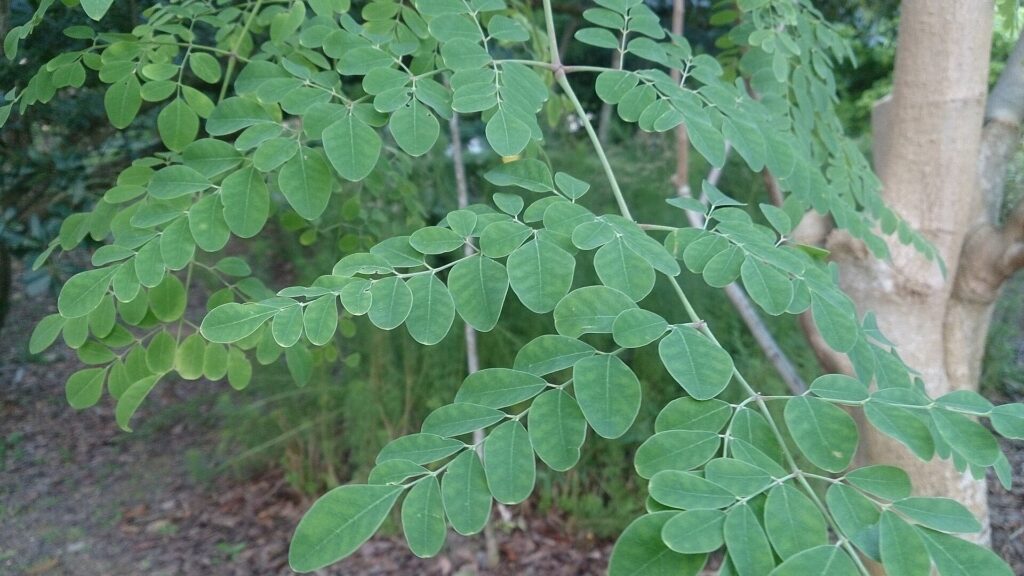
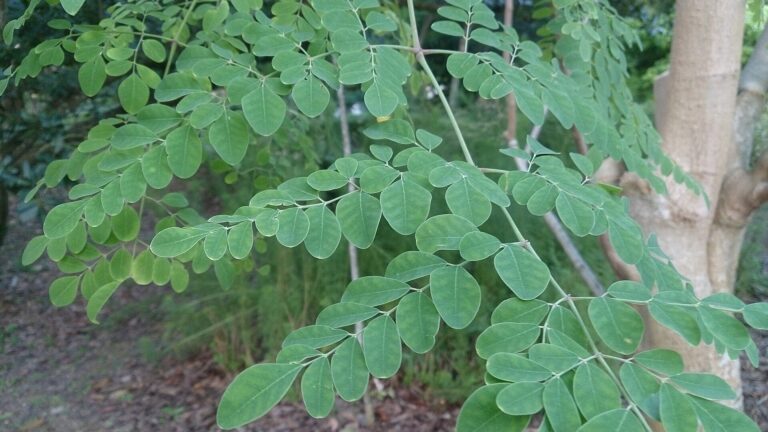
Moringa is a tree that grows very fast in hot, dry places. It has tiny round leaves and long green pods. In Asia and Africa, people cook the leaves and pods like vegetables.
Some people call it a miracle tree. It is a very good food, but it is not magic. Scientists are still checking what it can do.
🔵 Grandma's wisdom — not proven by science
It is called the drumstick tree because its long pods look like drumsticks.
Moringa is one of the fastest-growing trees. It can be taller than a grown-up after just a few months!
It can survive long dry seasons with very little water.
In some villages, crushed moringa seeds are used to help clean muddy water.
💡 Moringa loves heat and hates cold. In cold winters, bring the pot inside.
Answer 3 questions. Get 2 right to win this plant’s badge for your garden!
Why do some people call moringa the drumstick tree?
Its long, thin pods look like the sticks used to play drums.
Which parts of moringa do people eat most as food?
The leaves and young green pods are cooked like vegetables.
Moringa powder is full of vitamins. Is more always better?
Even good foods can harm in big amounts. Powders and pills are for grown-ups to decide.
🏅 You earned the Moringa badge!
Almost! Read the page again and retry — you can do it! 💪
Print it, cut it out and collect them all!
Moringa oleifera
🤩 It is called the drumstick tree because its long pods look like drumsticks.
General information, not medical advice. Talk to a doctor or pharmacist before using any herbal supplement — especially during pregnancy or breastfeeding, for children, before surgery, or if you take medicines. Medical disclaimer
| Use | Evidence | Details |
|---|---|---|
| Vitamins & good food | 🟢 Strong evidence (several good human trials) | Per 100 g, raw moringa (drumstick) leaves provide about 52 mg vitamin C, 378 µg vitamin A (RAE), 185 mg calcium, 4 mg iron and 9.4 g protein[6]. The leaves and immature pods are eaten as vegetables[1]. These figures describe nutrient content, not proven health effects. |
| Mum's milk supply | 🟡 Some evidence (small human studies) | Moringa is widely used as a galactagogue in Asia. According to LactMed, the most comprehensive meta-analysis (14 studies, 865 women) indicates that it increases prolactin and milk volume; long-term effects on infants are not well studied, and galactagogues should never replace lactation counselling[4]. |
| Blood sugar | 🟠 Early evidence (lab or animal studies only) | Many animal studies show lower blood glucose, but human trials are few and varied[3]. A 2025 meta-analysis of 9 randomised trials in adults found no consistent effect on glucose, lipids or weight, with very low certainty of evidence[2]. |
| Heart & blood vessels | 🟠 Early evidence (lab or animal studies only) | In the same 2025 meta-analysis, a modest reduction in diastolic blood pressure did not hold up in sensitivity analyses; the authors concluded that current evidence does not support consistent cardiometabolic benefits[2]. |
| Skin | 🔵 Traditional use (not scientifically confirmed) | Moringa is used in South Asian and African folk medicine for sores, skin infections and many other ailments, but clinical trial data are scarce and most studies of its compounds were done only in the laboratory[5]. |
Not a recommendation. Not for children unless a doctor says so. Products differ a lot — follow the label and your health professional.
| Energy | 64 kcal |
|---|---|
| Protein | 9.4 g |
| Carbohydrates | 8.3 g |
| Fiber | 2 g |
| Fat | 1.4 g |
| Calcium | 185 mg |
| Iron | 4 mg |
| Magnesium | 42 mg |
| Potassium | 337 mg |
| Vitamin C | 51.7 mg |
| Vitamin A | 378 µg |
| Vitamin B6 | 1.2 mg |
| Folate | 40 µg |
✅ Reviewed by sm_owner on September 26, 2026.
Last updated September 25, 2026. How we write and check our pages