Turmeric

Curcuma longa · Ginger family (Zingiberaceae)

Hi, I'm Turmeric! I'm the golden spice that makes food sunny yellow.

Turmeric
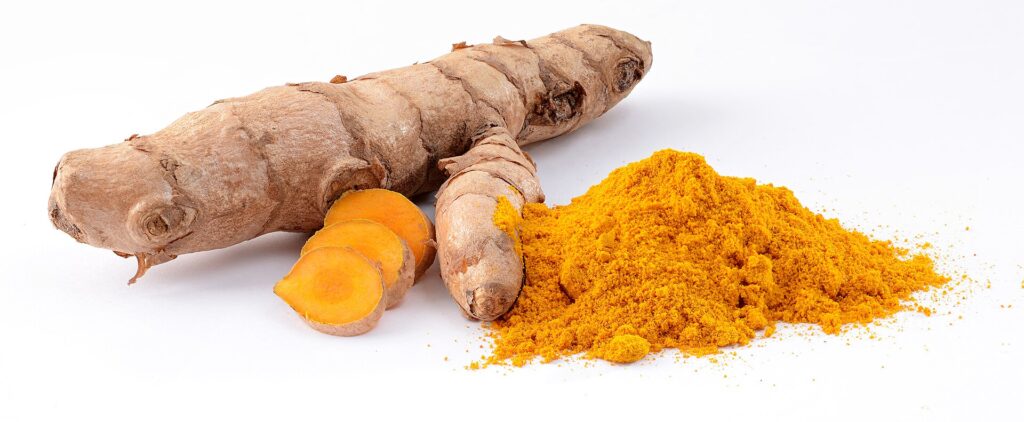
Image: Simon A. Eugster · CC BY-SA 3.0 · Wikimedia Commons

What does it help with?

  • Aches & swelling

    Scientists think turmeric may help sore knees in older people. They tested strong pills, not the spice in food.

    🟡 Scientists think so

  • Tummy & digestion

    For a long time, people have used turmeric to help a full, slow tummy after eating.

    🔵 Grandma's wisdom

  • Mouth & teeth

    Doctors are testing turmeric mouthwash to calm a sore mouth during strong hospital care.

    🟠 Still being studied

What do the colored dots mean?
  • 🟢 Scientists are sure Strong evidence (several good human trials)
  • 🟡 Scientists think so Some evidence (small human studies)
  • 🟠 Still being studied Early evidence (lab or animal studies only)
  • 🔵 Grandma's wisdom Traditional use (not scientifically confirmed)

How we grade evidence

Careful if…

For kids OK in normal food Pills, powders & oils: ask a grown-up first

Turmeric in rice, soups and tagines is fine for kids. Turmeric and curcumin pills are only for grown-ups, and only with a doctor's OK.

  • Liver problems

    ⛔ Avoid

    Very strong turmeric pills have hurt some people's liver. The spice in food is fine.

  • Pregnancy

    ⛔ Avoid

    Mums expecting a baby should not take turmeric pills. Turmeric in food is fine.

  • Breastfeeding

    ⚠️ Ask a doctor first

    Mums who breastfeed should ask a doctor before turmeric pills.

  • Heartburn & reflux

    👀 Be careful

    Turmeric pills can upset the tummy or give a burning feeling in the chest.

  • Taking medicines

    👀 Be careful

    If you take medicine, a grown-up should ask the doctor before you take turmeric pills.

If you have too much…

  • A sore tummy, burping or a dry mouth.
  • Itchy skin if a turmeric cream is put on it.

Natural does not always mean safe. Always ask a grown-up before trying something new, and a doctor or pharmacist before taking any supplement. Try the safety check →

What is it?

Turmeric is a plant from India. We use the bumpy part that grows under the ground. Inside, it is bright orange! People dry it and grind it into a yellow powder.

Turmeric gives colour and a warm taste to rice, soups and tagines. It is a cousin of ginger.

How people use it

In the kitchen

  • In curries, rice, soups and Moroccan tagines.
  • Warm milk with a pinch of turmeric, sometimes called golden milk.

Traditional uses

🔵 Grandma's wisdom — not proven by science

  • Used for a very long time in Indian traditional medicine.
  • Used to dye cloth a bright yellow.

Fun facts

  1. Turmeric can turn your fingers, your clothes and even your chopping board yellow!

  2. The yellow colour comes from a natural substance called curcumin.

  3. Turmeric is one of the spices in the Moroccan spice mix ras el hanout.

Grow it yourself

  • Medium
  • Some sun
  • Regular water
  • Grows in a pot
  • About 8 to 10 months
  1. Ask a grown-up for a fresh turmeric root with little bumps (buds).
  2. Lay it in a wide pot, buds up, just under the soil.
  3. Keep it warm and the soil a little damp.
  4. When the leaves turn yellow and dry, dig up your turmeric!

💡 Wear old clothes: fresh turmeric stains everything yellow!

Quiz time!

Answer 3 questions. Get 2 right to win this plant’s badge for your garden!

  1. What colour is turmeric powder?

  2. Turmeric is a cousin of which plant?

  3. Very strong turmeric pills can harm which part of the body?

Your plant card

Print it, cut it out and collect them all!

Turmeric

Curcuma longa

Superpowers
Aches & swelling Tummy & digestion Mouth & teeth
Careful
Liver problems, Pregnancy
Growing
⭐⭐

🤩 Turmeric can turn your fingers, your clothes and even your chopping board yellow!

supplementsmorocco.com

For grown-ups: science, amounts & safety

Tap to open

General information, not medical advice. Talk to a doctor or pharmacist before using any herbal supplement — especially during pregnancy or breastfeeding, for children, before surgery, or if you take medicines. Medical disclaimer

What the research says

Use Evidence Details
Aches & swelling 🟡 Some evidence (small human studies) Several meta-analyses of oral turmeric or curcumin for knee osteoarthritis are positive, but higher-quality evidence is needed[1]. In one meta-analysis of 8 randomised trials, turmeric extract (about 1,000 mg curcumin a day) reduced arthritis pain versus placebo and was similar to pain medicines, but trials were few and small[3].
Tummy & digestion 🔵 Traditional use (not scientifically confirmed) The EU herbal committee recognises turmeric for mild digestive problems such as fullness, slow digestion and wind as a traditional use in adults; studies had design shortcomings[2].
Mouth & teeth 🟠 Early evidence (lab or animal studies only) Initial research suggests oral or mouthwash turmeric/curcumin might improve oral mucositis caused by cancer treatment[1].

Amounts used in studies (adults)

Not a recommendation. Not for children unless a doctor says so. Products differ a lot — follow the label and your health professional.

  • Turmeric extract (arthritis trials): About 1,000 mg of curcumin a day in the trials reviewed.[3]
    Regular (not enhanced-absorption) turmeric is likely safe in recommended amounts for 2–3 months[1].

Who should be careful & interactions

  • ⛔ Avoid Liver problems: Liver damage has been reported with curcumin products designed for higher absorption. Stop and see a doctor if you notice fatigue, nausea, poor appetite, dark urine or yellow skin/eyes[1]. People with liver problems should avoid turmeric supplements.
  • ⛔ Avoid Pregnancy: Turmeric supplements during pregnancy may be unsafe[1].
  • ⚠️ Ask a doctor first Breastfeeding: Little is known about the safety of turmeric in amounts above those in food while breastfeeding[1].
  • 👀 Be careful Heartburn & reflux: Oral turmeric can cause acid reflux, nausea, stomach upset, diarrhoea or constipation[1].
  • 👀 Be careful Taking medicines: Products vary widely in curcumin content and often contain other plant substances such as piperine from black pepper, which increases absorption[1]. Tell your doctor or pharmacist about any turmeric supplement.

Possible side effects

  • Mild Dry mouth, flatulence and stomach irritation[2]; nausea, diarrhoea or constipation[1].
  • Mild Topical curcumin can cause hives or itching[1].

Names & identifiers

Scientific name
Curcuma longa
Also called
Curcuma, Indian saffron
Wikidata
Q42562

Sources

  1. Turmeric National Center for Complementary and Integrative Health (NCCIH), NIH · Guideline
  2. Curcumae longae rhizoma – herbal medicinal product European Medicines Agency, HMPC · Official monograph
  3. Efficacy of Turmeric Extracts and Curcumin for Alleviating the Symptoms of Joint Arthritis: A Systematic Review and Meta-Analysis of Randomized Clinical Trials Journal of Medicinal Food · 2016 · Research review · PubMed

✅ Reviewed by sm_owner on September 26, 2026.

Last updated September 25, 2026. How we write and check our pages

✏️ Suggest an edit

We only use this to improve the page. We never share it.