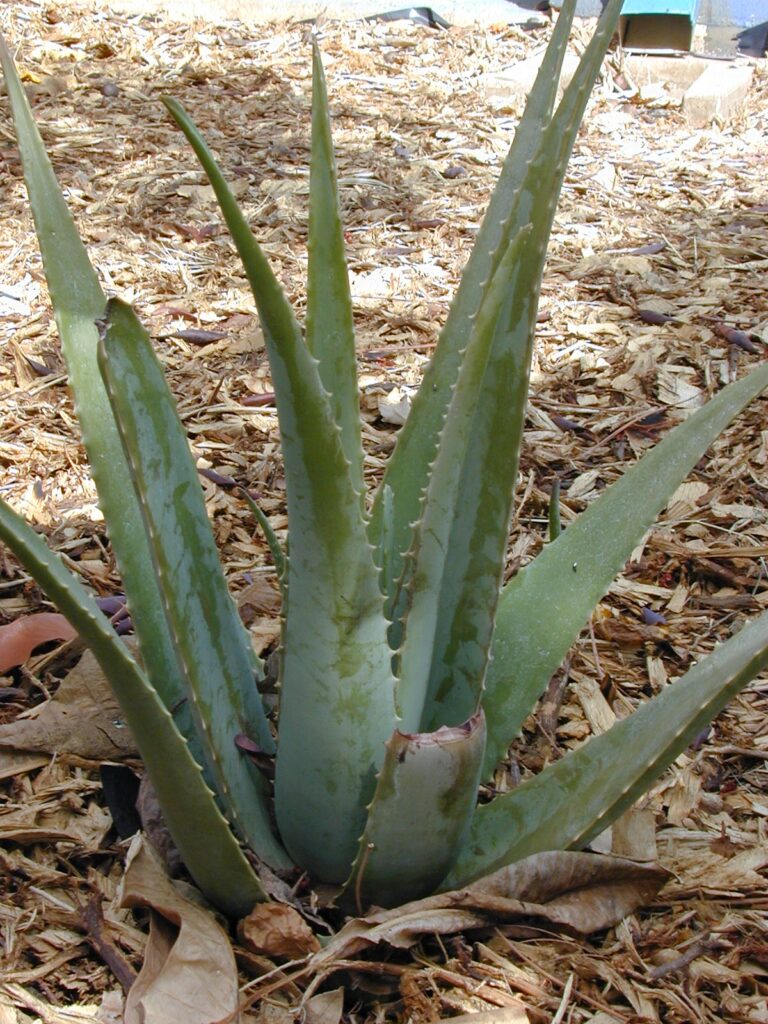
Aloe vera

Aloe vera · Aloe family (Asphodelaceae)

Hi, I'm Aloe! My fat leaves are full of cool, slimy gel.

Aloe vera
Image: Forest & Kim Starr · CC BY 3.0 · Wikimedia Commons

What does it help with?

  • Cuts, burns & wounds

    Aloe gel on the skin may help small burns heal faster and hurt less.

    🟡 Scientists think so

  • Skin

    Scientists are testing aloe gel for spots and other skin problems. They are not sure yet.

    🟠 Still being studied

  • Blood sugar

    In grown-ups with diabetes, aloe drinks lowered blood sugar a little in some studies.

    🟡 Scientists think so

  • Tummy & digestion

    The bitter yellow aloe juice is a very strong medicine for grown-ups who can't poop. It is not for kids.

    🟡 Scientists think so

What do the colored dots mean?
  • 🟢 Scientists are sure Strong evidence (several good human trials)
  • 🟡 Scientists think so Some evidence (small human studies)
  • 🟠 Still being studied Early evidence (lab or animal studies only)
  • 🔵 Grandma's wisdom Traditional use (not scientifically confirmed)

How we grade evidence

Careful if…

For kids Pills, powders & oils: ask a grown-up first

A grown-up can put aloe gel on a small burn or sunburn. Never eat or drink aloe from a plant: the yellow juice is a strong laxative.

  • Babies & young kids

    ⛔ Avoid

    Never eat or drink aloe from a plant. Only a grown-up can put aloe gel on your skin.

  • Pregnancy

    ⛔ Avoid

    Mums expecting a baby should not eat or drink aloe.

  • Breastfeeding

    ⛔ Avoid

    Mums who breastfeed should not take aloe by mouth.

  • Liver problems

    ⚠️ Ask a doctor first

    Aloe pills and drinks have made some people's liver sick.

  • Taking medicines

    ⚠️ Ask a doctor first

    People taking heart medicine must ask their doctor before using aloe juice.

  • Allergies

    👀 Be careful

    If aloe gel makes your skin burn or itch, wash it off and tell a grown-up.

If you have too much…

  • Tummy cramps and runny poop if aloe juice is swallowed.
  • Itchy or burning skin where the gel was put.

Natural does not always mean safe. Always ask a grown-up before trying something new, and a doctor or pharmacist before taking any supplement. Try the safety check →

What is it?

Aloe vera is a spiky green plant from hot, dry places. Its thick leaves store water, so it can live for a long time without rain.

Inside each leaf is a clear gel. People put it on small burns and sunburn. Just under the leaf skin there is also a bitter yellow juice. That part is a strong medicine and is not for eating.

How people use it

Traditional uses

🔵 Grandma's wisdom — not proven by science

  • Used for thousands of years on burns and wounds.

On skin & body

  • Gel on small burns and sunburn.
  • In creams, soaps and after-sun lotions.

Home & garden

  • A very easy houseplant for a sunny window.

Fun facts

  1. Aloe is not a cactus! It belongs to a different plant family, but it also loves the desert.

  2. Aloe grows baby plants called pups around its base. You can replant them!

  3. The gel inside the leaf is mostly water.

Grow it yourself

  • Easy
  • Lots of sun
  • A little water
  • Grows in a pot
  • Leaves are big enough to use after 1 to 2 years
  1. Ask a grown-up for a small aloe pup (baby plant).
  2. Plant it in a pot with sandy cactus soil and a hole at the bottom.
  3. Put it by a sunny window.
  4. Water only when the soil is completely dry. Too much water kills aloe!

💡 Watch out for the little spikes on the edges of the leaves.

Quiz time!

Answer 3 questions. Get 2 right to win this plant’s badge for your garden!

  1. Where does aloe keep its water?

  2. What should you do with aloe from a plant?

  3. Is aloe vera a cactus?

Your plant card

Print it, cut it out and collect them all!

Aloe vera

Aloe vera

Superpowers
Cuts, burns & wounds Skin Blood sugar
Careful
Babies & young kids, Pregnancy
Growing
⭐

🤩 Aloe is not a cactus! It belongs to a different plant family, but it also loves the desert.

supplementsmorocco.com

For grown-ups: science, amounts & safety

Tap to open

General information, not medical advice. Talk to a doctor or pharmacist before using any herbal supplement — especially during pregnancy or breastfeeding, for children, before surgery, or if you take medicines. Medical disclaimer

What the research says

Use Evidence Details
Cuts, burns & wounds 🟡 Some evidence (small human studies) Clinical research suggests topical aloe gel may speed burn healing and reduce burn-related pain[1].
Skin 🟠 Early evidence (lab or animal studies only) Two small studies suggest topical aloe gel, combined with other treatments, may improve acne; small amounts of research exist for psoriasis, lichen planus, genital herpes and radiation skin damage[1].
Blood sugar 🟡 Some evidence (small human studies) A small amount of research suggests oral aloe may reduce blood glucose and HbA1c in people with diabetes[1].
Tummy & digestion 🟡 Some evidence (small human studies) Dried aloe juice (aloes) is accepted in the EU for short-term treatment of occasional constipation, based on well-established use, in people over 12 and for no longer than 1 week[2].

Who should be careful & interactions

  • ⛔ Avoid Babies & young kids: Aloe laxatives must not be used under 12 years[2]. Oral aloe latex can cause cramps and diarrhoea[1].
  • ⛔ Avoid Pregnancy: Aloe taken by mouth (gel, latex or whole-leaf extract) may be unsafe during pregnancy and breastfeeding[1].
  • ⛔ Avoid Breastfeeding: Oral aloe may be unsafe while breastfeeding[1].
  • ⚠️ Ask a doctor first Liver problems: Oral aloe leaf extracts (taken for 3 weeks to 5 years) have been linked to cases of acute hepatitis[1].
  • ⚠️ Ask a doctor first Taking medicines: Overuse of aloe latex may increase adverse effects of cardiac glycosides such as digoxin[1]. Long-term laxative use may cause water and salt imbalance[2].
  • 👀 Be careful Allergies: Topical aloe gel is generally well tolerated, but burning, itching, rash and eczema have occasionally been reported[1]; allergic reactions to aloes medicines may occur[2].

Possible side effects

  • Moderate Oral aloe latex can cause abdominal pain, cramps and diarrhoea[1].
  • Mild Occasional burning, itching, rash or eczema with topical use[1].

Names & identifiers

Scientific name
Aloe vera
Also called
Aloe, Burn plant
Wikidata
Q80079

Sources

  1. Aloe Vera National Center for Complementary and Integrative Health (NCCIH), NIH · Guideline
  2. Aloes folii succus siccatus – herbal medicinal product (dried aloe juice) European Medicines Agency, HMPC · Official monograph

✅ Reviewed by sm_owner on September 26, 2026.

Last updated September 25, 2026. How we write and check our pages

✏️ Suggest an edit

We only use this to improve the page. We never share it.