


 Natural does not always mean safe. Always ask a grown-up before trying something new, and a doctor or pharmacist before taking any supplement.
 How people use it
 In the kitchen
 Traditional uses
 Home & garden
 Fun facts


Argan

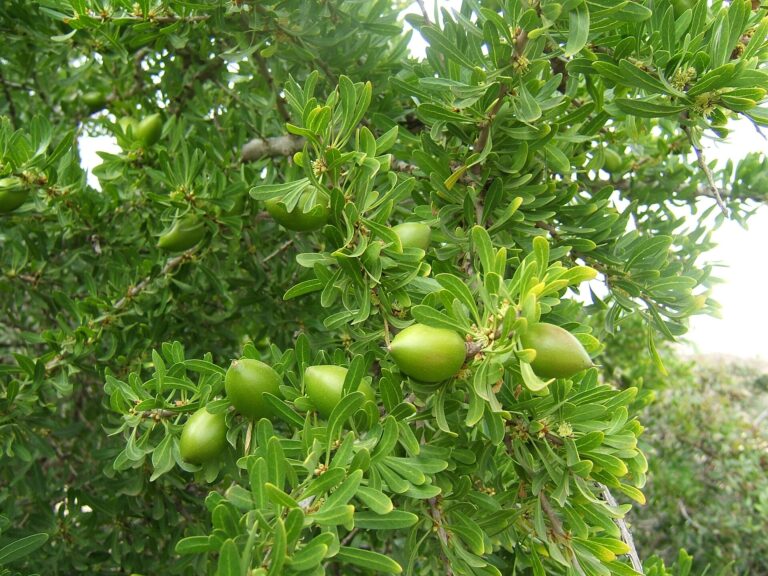
Argania spinosa
- Superpowers
-
 Heart & blood vessels
 Skin
Skin
 Vitamins & good food
- Growing
- ⭐⭐⭐
🤩 In Morocco, goats climb high into argan trees to eat the fruit!
Argania spinosa · Sapodilla family (Sapotaceae)
Hi, I'm Argan! I grow in Morocco, and goats love to climb me!
Eating argan oil may help keep blood fats healthy. Scientists think so, but the studies are small.
🟡 Scientists think so
Many people put argan oil on dry skin and hair. Scientists are still studying how much it helps.
🟠 Still being studied
In Morocco, people dip bread in argan oil and mix it with almonds and honey to make amlou.
🔵 Grandma's wisdom
For kids OK in normal food Pills, powders & oils: ask a grown-up first
A little culinary argan oil on bread is a tasty family food. Cosmetic argan oil is for skin and hair, not for eating. Kids with nut allergies should ask a doctor first.
Natural does not always mean safe. Always ask a grown-up before trying something new, and a doctor or pharmacist before taking any supplement. Try the safety check →
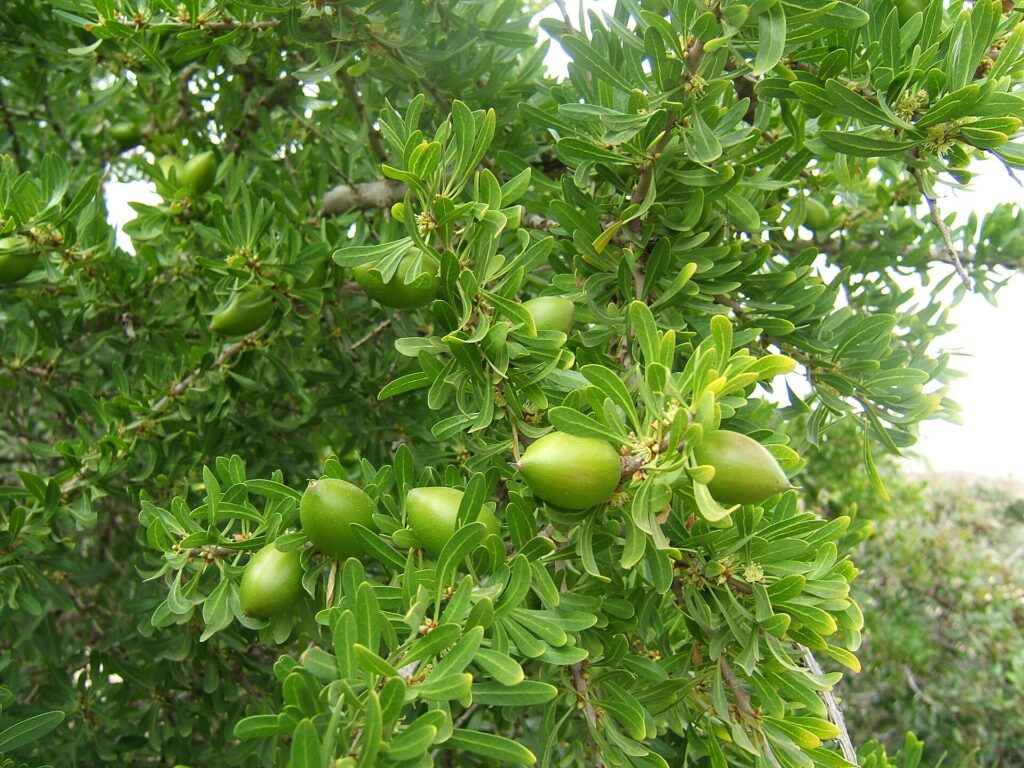
The argan tree is a tough, thorny tree that grows mainly in south-west Morocco. It can live through long, dry summers.
Inside its fruit there is a hard nut with small kernels. People crack the nuts by hand and press the kernels to make argan oil. Some oil is for food, and some is for skin and hair.
🔵 Grandma's wisdom — not proven by science
In Morocco, goats climb high into argan trees to eat the fruit!
Argan trees grow almost only in Morocco. The argan forest is a UNESCO biosphere reserve.
Cracking argan nuts by hand is hard work, often done by women's cooperatives.
💡 Argan trees grow very slowly and prefer a warm, dry climate like south-west Morocco.
Answer 3 questions. Get 2 right to win this plant’s badge for your garden!
Which animals are famous for climbing argan trees?
Goats climb argan trees to eat the fruit and leaves.
Where do argan trees mainly grow?
Argan trees grow almost only in south-west Morocco.
What is amlou made of?
Amlou is a Moroccan spread of argan oil, almonds and honey.
🏅 You earned the Argan badge!
Almost! Read the page again and retry — you can do it! 💪
Print it, cut it out and collect them all!
Argania spinosa
Heart & blood vessels
Skin
Vitamins & good food
🤩 In Morocco, goats climb high into argan trees to eat the fruit!
General information, not medical advice. Talk to a doctor or pharmacist before using any herbal supplement — especially during pregnancy or breastfeeding, for children, before surgery, or if you take medicines. Medical disclaimer
| Use | Evidence | Details |
|---|---|---|
| Heart & blood vessels | 🟡 Some evidence (small human studies) | A meta-analysis of 5 randomised trials (292 participants) found that dietary argan oil lowered total cholesterol A kind of fat in the blood. Too much can block blood tubes., LDL cholesterol and triglycerides and raised HDL cholesterol; larger trials on cardiovascular outcomes are needed[1]. |
| Skin | 🟠 Early evidence (lab or animal studies only) | Reviews describe argan oil as hydrating the skin and possibly soothing conditions like eczema and acne, but its mechanisms are not fully understood and strong clinical trials are lacking[2]. |
| Vitamins & good food | 🔵 Traditional use (not scientifically confirmed) | Culinary argan oil is a traditional food of south-west Morocco, used with bread and in amlou; reviews highlight its nutritional properties[2]. |
✅ Reviewed by sm_owner on September 26, 2026.
Last updated September 25, 2026. How we write and check our pages

