Chamomile

Matricaria chamomilla · Daisy family (Asteraceae)

Hi, I'm Chamomile! I'm a tiny flower that makes a cosy bedtime tea.

Chamomile
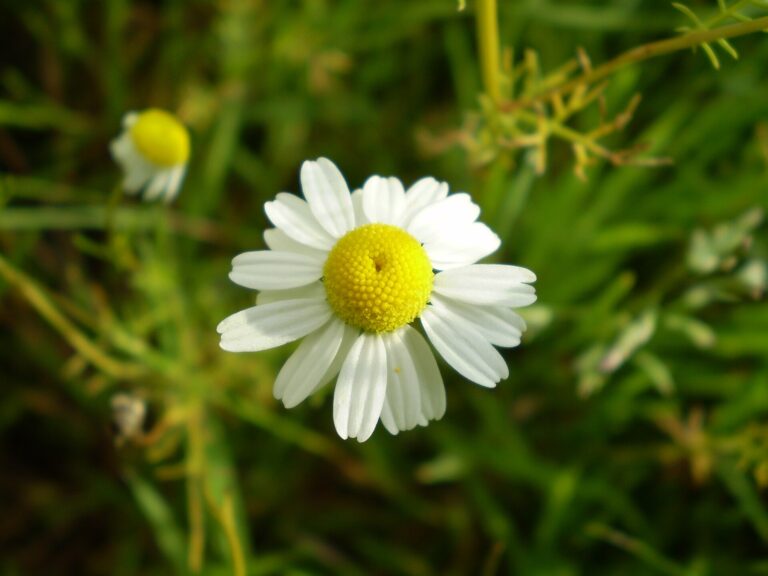
Image: Rob Hille · Public domain · Wikimedia Commons

What does it help with?

  • Sleep

    Chamomile tea may help some people sleep better and wake up less at night.

    🟡 Scientists think so

  • Calm & worry

    Some small tests hint that chamomile may help grown-ups who worry a lot feel more calm.

    🟡 Scientists think so

  • Tummy & digestion

    People have long had chamomile tea for a puffy, crampy tummy.

    🔵 Grandma's wisdom

  • Mouth & teeth

    Some people rinse their mouth with chamomile tea when it has small sores.

    🔵 Grandma's wisdom

  • Skin

    Cool chamomile is an old trick for mild sunburn and small scrapes.

    🔵 Grandma's wisdom

What do the colored dots mean?
  • 🟢 Scientists are sure Strong evidence (several good human trials)
  • 🟡 Scientists think so Some evidence (small human studies)
  • 🟠 Still being studied Early evidence (lab or animal studies only)
  • 🔵 Grandma's wisdom Traditional use (not scientifically confirmed)

How we grade evidence

Careful if…

For kids OK in normal food Pills, powders & oils: ask a grown-up first

A cup of mild chamomile tea is fine for most kids, but not for kids allergic to daisies or ragweed. Babies only with a doctor's OK.

  • Daisy-family allergy (ragweed)

    ⛔ Avoid

    If daisies, ragweed or marigolds make you sneeze or itch, don't drink chamomile.

  • Blood-thinning medicines

    ⚠️ Ask a doctor first

    People taking blood-thinning medicine should ask their doctor before chamomile supplements.

  • Taking medicines

    ⚠️ Ask a doctor first

    Chamomile can change how some medicines work. Grown-ups should check with the doctor.

  • Pregnancy

    ⚠️ Ask a doctor first

    Mums expecting a baby should ask a doctor before chamomile supplements.

  • Babies & young kids

    👀 Be careful

    Babies should not get chamomile unless a doctor says so.

If you have too much…

  • Feeling a bit sick or dizzy (this is rare).
  • A strong allergy with swelling or trouble breathing. Get help right away!

Natural does not always mean safe. Always ask a grown-up before trying something new, and a doctor or pharmacist before taking any supplement. Try the safety check →

What is it?

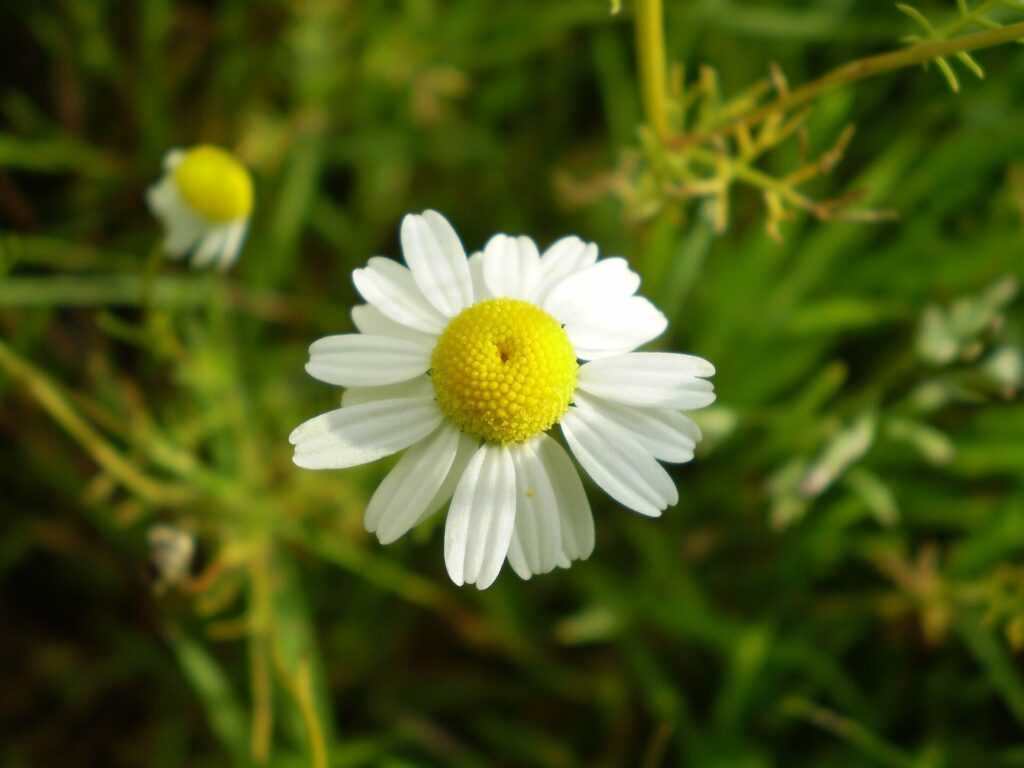
Chamomile is a small plant with white petals and a yellow middle. It looks like a tiny daisy. People dry the flowers to make a mild tea.

The tea smells a bit like apples. Many families drink it at night to feel calm.

How people use it

In the kitchen

  • Dried flowers steeped in hot water for tea.

Traditional uses

🔵 Grandma's wisdom — not proven by science

  • A warm cup before bed to feel calm.
  • Rinsing the mouth for small sores.

On skin & body

  • In gentle creams and baths for irritated skin.

Fun facts

  1. Its name comes from Greek words meaning “earth apple”, because it smells a little like apples.

  2. Chamomile is a cousin of daisies and sunflowers.

  3. In a famous story, Peter Rabbit's mother gives him chamomile tea after his adventure.

Grow it yourself

  • Easy
  • Lots of sun
  • Regular water
  • Grows in a pot
  • About 2 to 3 months from seed
  1. Sprinkle the tiny seeds on top of damp soil. Do not cover them: they need light to wake up.
  2. Keep the pot in the sun and the soil a little damp.
  3. Pick the flowers when they are fully open.
  4. Let them dry on a paper towel for a week, then keep them in a jar.

Quiz time!

Answer 3 questions. Get 2 right to win this plant’s badge for your garden!

  1. Chamomile looks like a tiny…

  2. Who should NOT drink chamomile tea?

  3. Which part of chamomile is used for tea?

Your plant card

Print it, cut it out and collect them all!

Chamomile

Matricaria chamomilla

Superpowers
Sleep Calm & worry Tummy & digestion
Careful
Daisy-family allergy (ragweed), Blood-thinning medicines
Growing
⭐

🤩 Its name comes from Greek words meaning “earth apple”, because it smells a little like apples.

supplementsmorocco.com

For grown-ups: science, amounts & safety

Tap to open

General information, not medical advice. Talk to a doctor or pharmacist before using any herbal supplement — especially during pregnancy or breastfeeding, for children, before surgery, or if you take medicines. Medical disclaimer

What the research says

Use Evidence Details
Sleep 🟡 Some evidence (small human studies) A 2024 meta-analysis of clinical trials found chamomile improved sleep quality, especially night-time awakenings, but not sleep duration, sleep efficiency or daytime functioning[3]. NCCIH notes very little research on insomnia itself[1].
Calm & worry 🟡 Some evidence (small human studies) Preliminary studies suggest a chamomile supplement might help generalised anxiety disorder and associated depression[1].
Tummy & digestion 🔵 Traditional use (not scientifically confirmed) The EU herbal committee recognises chamomile flower for minor digestive complaints such as bloating and minor spasms, as a traditional use[2].
Mouth & teeth 🔵 Traditional use (not scientifically confirmed) Traditional use for minor ulcers and inflammation of the mouth and throat is recognised[2]; small studies suggest chamomile mouthwashes might help mouth irritation from cancer treatment[1].
Skin 🔵 Traditional use (not scientifically confirmed) Traditional use is recognised for minor skin inflammation (sunburn), superficial wounds and small boils[2].

Who should be careful & interactions

  • ⛔ Avoid Daisy-family allergy (ragweed): Allergic reactions, including severe ones (anaphylaxis), are possible — more likely in people allergic to ragweed, chrysanthemums, marigolds or daisies[1]. Do not use in case of allergy to plants of the Asteraceae family[2].
  • ⚠️ Ask a doctor first Blood-thinning medicines: Interactions between chamomile and warfarin have been reported[1].
  • ⚠️ Ask a doctor first Taking medicines: Interactions with some drugs metabolised by the liver have been reported, and interactions with sedatives are theoretically possible. Chamomile might have oestrogen-like effects: it may reduce the effect of birth-control pills and could worsen oestrogen-sensitive conditions[1].
  • ⚠️ Ask a doctor first Pregnancy: Little is known about whether chamomile is safe during pregnancy or breastfeeding[1].
  • 👀 Be careful Babies & young kids: Most chamomile medicines are for people over 12; only some preparations are recommended for younger children[2]. Chamomile alone has not been shown to help infant colic[1].

Possible side effects

  • Mild Side effects are uncommon and may include nausea and dizziness; chamomile near the eyes may cause irritation[1].
  • Serious Severe hypersensitivity reactions and anaphylaxis have been reported in some people[1][2].

Names & identifiers

Scientific name
Matricaria chamomilla
Also called
German chamomile, Camomile
Wikidata
Q28437

Sources

  1. Chamomile National Center for Complementary and Integrative Health (NCCIH), NIH · Guideline
  2. Matricariae flos – herbal medicinal product European Medicines Agency, HMPC · Official monograph
  3. Effects of chamomile (Matricaria chamomilla L.) on sleep: A systematic review and meta-analysis of clinical trials Complementary Therapies in Medicine · 2024 · Research review · PubMed

✅ Reviewed by sm_owner on September 26, 2026.

Last updated September 25, 2026. How we write and check our pages

✏️ Suggest an edit

We only use this to improve the page. We never share it.