
 Trees & tree leaves


 Natural does not always mean safe. Always ask a grown-up before trying something new, and a doctor or pharmacist before taking any supplement.
 How people use it
 In the kitchen
 Traditional uses
 Home & garden
 Fun facts


Fig

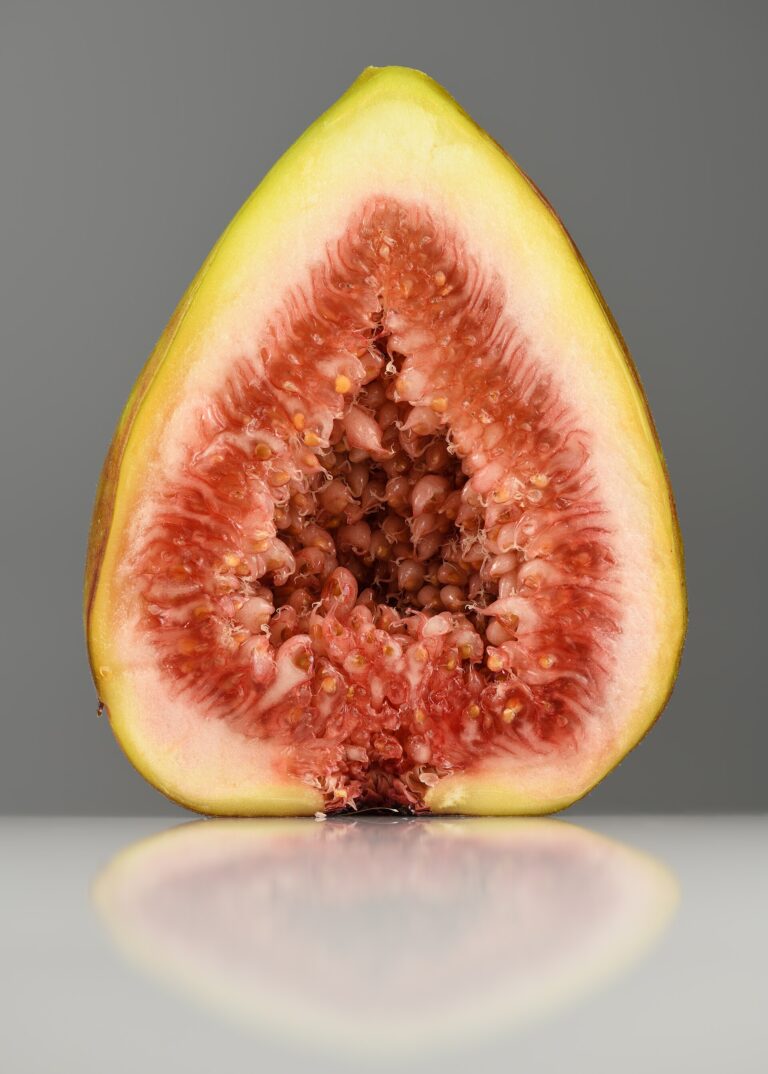
Ficus carica
- Superpowers
-
 Vitamins & good food
 Tummy & digestion
- Careful
- Skin burns with sunlight, Allergies
- Growing
- ⭐
🤩 A fig is really lots of tiny flowers hiding inside a skin!
Ficus carica · Fig family (Moraceae)
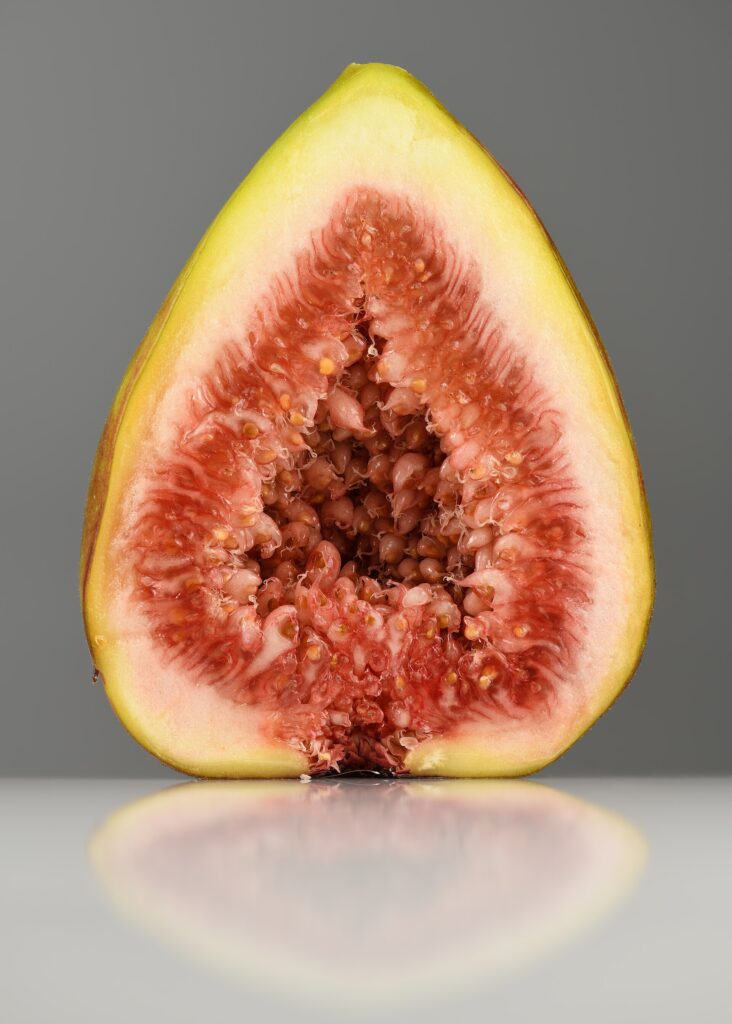
Hi, I'm Fig! I look plain outside, but inside I'm pink, sweet and full of tiny crunchy seeds!
Figs give you fiber The chewy part of plants that helps your tummy and poop move well. for your tummy and potassium for your muscles.
🟢 Scientists are sure
In one test, fig paste helped grown-ups who found it hard to poop.
🟠 Still being studied
For kids OK in normal food Pills, powders & oils: ask a grown-up first
Fresh and dried figs are a great snack. Dried figs are sticky and sweet, so brush your teeth after. Cut them up for little kids.

⚠️ Ask a doctor first
Don't play with fig leaves or sap in the sun. The sap can burn your skin.

👀 Be careful
A few people are allergic to figs, especially if latex, like in balloons, makes them itchy.
Natural does not always mean safe. Always ask a grown-up before trying something new, and a doctor or pharmacist before taking any supplement. Try the safety check →
A fig is a soft, sweet fruit that grows on a fig tree. Inside, it is pink or red. It has lots of tiny seeds that crunch.
Fig trees love hot, dry places like Morocco. You can eat figs fresh in summer, or dried all year long.
🔵 Grandma's wisdom — not proven by science
A fig is really lots of tiny flowers hiding inside a skin!
People may have planted fig trees more than 11,000 years ago.
In Moroccan Darija, figs are called “karmous”.
Snap a fig leaf and a white, milky sap comes out.
💡 Wear gloves: fig sap can hurt skin in the sun.
Answer 3 questions. Get 2 right to win this plant’s badge for your garden!
What is really inside a fig?
A fig is lots of tiny flowers inside a skin, and they make lots of little seeds.
What can fig sap do in the sun?
Fig sap plus sunshine can burn skin, so wear gloves near fig trees.
What do Moroccans call figs in Darija?
In Morocco, figs are called karmous.
🏅 You earned the Fig badge!
Almost! Read the page again and retry — you can do it! 💪
Print it, cut it out and collect them all!
Ficus carica
Vitamins & good food
Tummy & digestion
🤩 A fig is really lots of tiny flowers hiding inside a skin!
General information, not medical advice. Talk to a doctor or pharmacist before using any herbal supplement — especially during pregnancy or breastfeeding, for children, before surgery, or if you take medicines. Medical disclaimer
| Use | Evidence | Details |
|---|---|---|
| Vitamins & good food | 🟢 Strong evidence (several good human trials) | Per 100 g, raw figs provide 74 kcal, 2.9 g fibre, 232 mg potassium and 35 mg calcium[1]. |
| Tummy & digestion | 🟠 Early evidence (lab or animal studies only) | In a randomised, placebo-controlled trial in 80 adults with functional constipation, 8 weeks of fig paste shortened colon transit time and improved stool form and abdominal discomfort[2]. A meta-analysis of fruit trials suggests kiwifruit may work better than fig paste; larger studies are needed[3]. |
| Energy | 74 kcal |
|---|---|
| Carbohydrates | 19.2 g |
| Sugars | 16.3 g |
| Fiber | 2.9 g |
| Protein | 0.8 g |
| Calcium | 35 mg |
| Magnesium | 17 mg |
| Potassium | 232 mg |
✅ Reviewed by sm_owner on September 26, 2026.
Last updated September 26, 2026. How we write and check our pages

