Peppermint may calm a crampy tummy. Scientists tested special peppermint oil capsules in grown-ups with a sensitive tummy. Mint tea after a meal is an old tradition too.
🟡 Scientists think so
Aches & swelling
Some grown-ups dab a little peppermint oil on their forehead when they have a headache. It feels cool. This is only for grown-ups.
🟡 Scientists think so
Feeling sick (nausea)
Smelling peppermint may help some people feel less sick to their tummy, for example during strong hospital treatments.
🟡 Scientists think so
Colds & coughs
The strong smell of mint can make a stuffy nose feel clearer. Mint rubs are not for little kids.
🔵 Grandma's wisdom
What do the colored dots mean?
🟢 Scientists are sure Strong evidence (several good human trials)
🟡 Scientists think so Some evidence (small human studies)
🟠 Still being studied Early evidence (lab or animal studies only)
🔵 Grandma's wisdom Traditional use (not scientifically confirmed)
For kidsOK in normal foodPills, powders & oils: ask a grown-up first
Fresh mint in food and a cup of mild mint tea are fine for most kids. Tip: ask for less sugar in your tea! Mint oil is only for grown-ups, and never on a baby's face.
Babies & young kids
⛔ Avoid
Mint oil must never go near a baby's or a little kid's face. It can make it hard for them to breathe.
Essential oils (never swallow)
⛔ Avoid
Never drink or lick drops of mint oil from a bottle. It is super strong.
Heartburn & reflux
⚠️ Ask a doctor first
Lots of mint can give some people a burning feeling in their chest.
Gallstones
⚠️ Ask a doctor first
People with gallstones should ask a doctor before using a lot of mint.
Pregnancy
👀 Be careful
Mint in food and tea is fine for mums expecting a baby. Strong mint medicines need a doctor's OK.
Breastfeeding
👀 Be careful
Mums feeding a baby should ask before using mint oil, and keep it away from the baby's face.
Allergies
👀 Be careful
A few people get an itchy rash from mint oil on their skin.
If you have too much…
A burning feeling in your chest or a sore tummy.
Red, itchy skin where mint oil was rubbed.
Natural does not always mean safe. Always ask a grown-up before trying something new, and a doctor or pharmacist before taking any supplement. Try the safety check →
What is it?
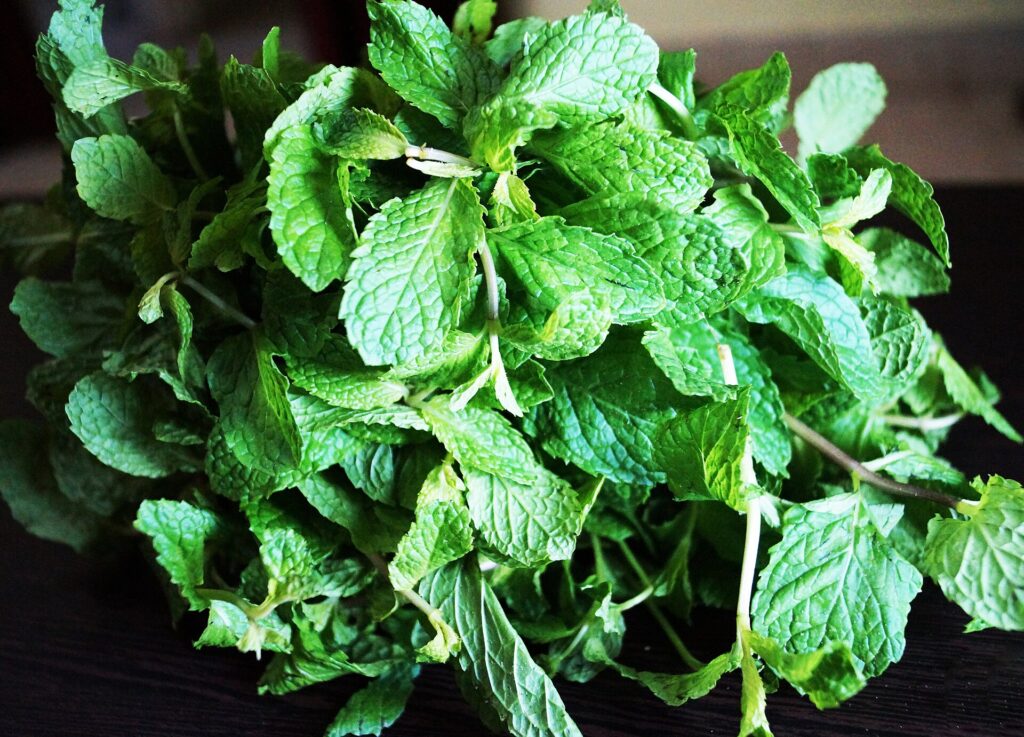
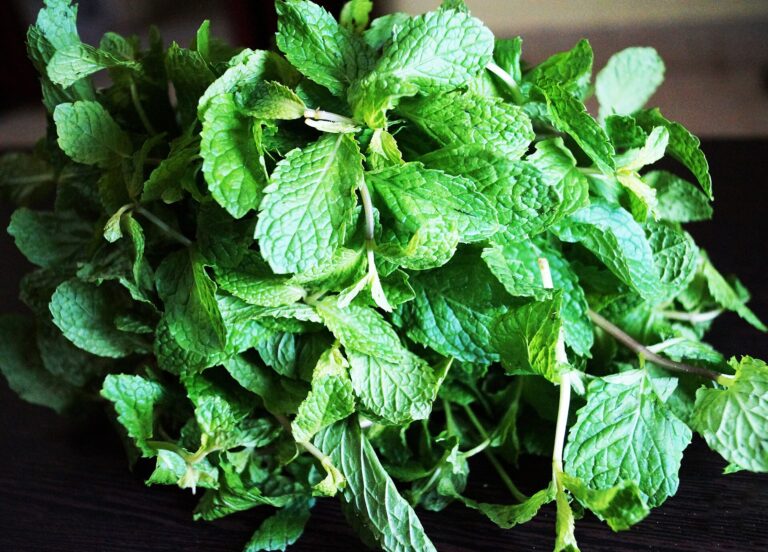
Mint is a small green herb with a fresh, cool smell. Rub a leaf and sniff your fingers! There are many kinds. Spearmint is the one in Moroccan mint tea. Peppermint is the one in many sweets and toothpastes.
Mint grows so fast that it can take over a whole garden. That is why people often keep it in pots.
How people use it
In the kitchen
Fresh leaves in Moroccan mint tea, brewed with green tea.
Chopped into salads, yogurt sauces and fruit salads.
The flavour in chewing gum, sweets and toothpaste.
Traditional uses
🔵 Grandma's wisdom — not proven by science
A warm cup after a big meal to help digestion.
Sniffing crushed leaves when feeling sick or stuffy.
On skin & body
Peppermint oil rubs for sore muscles and headaches — grown-ups only.
Home & garden
A pot on the windowsill gives fresh leaves almost all year.
Fun facts
1
Mint feels cool, but it is not cold! Its menthol The natural stuff in mint that makes your mouth feel cool and fresh. tricks the cold-feeling nerves in your mouth.
2
Peppermint is a mix of two other mints: water mint and spearmint.
3
In Morocco, mint tea is poured from high up to make a little crown of bubbles on top.
4
Mint spreads with runners under the ground, so one small plant can fill a garden bed!
Grow it yourself
⭐ Easy
⛅ Some sun
💧💧💧 Lots of water
🪴 Grows in a pot
⏳ About 2 months
Put a fresh mint stem from the market in a glass of water.
Wait until little white roots grow. It takes about one or two weeks.
Plant it in a pot with soil.
Water it often so the soil stays damp.
Pick the top leaves often. The plant grows bushier!
💡 Keep mint in its own pot, or it will take over the garden!
Quiz time!
Answer 3 questions. Get 2 right to win this plant’s badge for your garden!
What makes mint feel cool in your mouth?
Menthol tricks the cold-feeling nerves in your mouth. The leaf is not really cold.
Which mint is used in Moroccan mint tea?
Spearmint (nana) is the classic mint for Moroccan tea.
Why must mint oil never go near a baby's face?
The menthol in mint oil can affect how babies and little kids breathe.
🏅 You earned the Mint badge!
Almost! Read the page again and retry — you can do it! 💪
Babies & young kids, Essential oils (never swallow)
Growing
⭐
🤩 Mint feels cool, but it is not cold! Its menthol tricks the cold-feeling nerves in your mouth.
For grown-ups: science, amounts & safety
Tap to open
General information, not medical advice. Talk to a doctor or pharmacist before using any herbal supplement — especially during pregnancy or breastfeeding, for children, before surgery, or if you take medicines. Medical disclaimer
What the research says
Use
Evidence
Details
Tummy & digestion
🟡 Some evidence (small human studies)
In a 2022 meta-analysis of 10 randomised trials (1,030 patients with irritable bowel syndrome), peppermint oil capsules improved overall symptoms and abdominal pain more than placebo, with more — mostly mild — side effects such as reflux[3]. The EU herbal committee accepts oral peppermint oil for belly cramps, wind and pain, especially in IBS (well-established use, not under 8 years)[2]. Peppermint leaf tea for indigestion and wind is recognised only as a traditional use, from 4 years[4].
Aches & swelling
🟡 Some evidence (small human studies)
A study found that 10% peppermint oil in ethanol, rubbed on the forehead and temples, reduced tension-headache intensity; the EU herbal committee accepts this use for adults only (not under 18)[2]. NCCIH describes the evidence as limited[1].
Feeling sick (nausea)
🟡 Some evidence (small human studies)
A small amount of research, including a 2024 review of aromatherapy studies, suggests that inhaling peppermint oil can reduce nausea and vomiting during cancer chemotherapy[1].
Colds & coughs
🔵 Traditional use (not scientifically confirmed)
Relief of cough and cold symptoms with inhaled or chest-rub peppermint oil is recognised as traditional use only; these products must not be used under 2 years and are not recommended from 2 to 11 years[2].
Amounts used in studies (adults)
Not a recommendation. Not for children unless a doctor says so. Products differ a lot — follow the label and your health professional.
Peppermint oil on the skin (tension headache):
A 10% peppermint oil solution in ethanol applied to the forehead and temples, as in the study; adults only.[2]
Peppermint oil capsules (irritable bowel syndrome):
Trials used enteric-coated capsules; follow the product label and your doctor — amounts differ between products.[1][3] Not under 8 years for this use[2].
Who should be careful & interactions
⛔ AvoidBabies & young kids:
Menthol should not be inhaled by or applied to the face of infants or small children because it may affect their breathing[1]. EU rules: no peppermint oil under 2 years; oral products not under 8; cold rubs not from 2 to 11; headache rubs not under 18[2].
⛔ AvoidEssential oils (never swallow):
Peppermint oil is a highly concentrated essential oil[1]; medicines use measured amounts in specific forms such as enteric-coated capsules[2]. Keep bottles out of children's reach.
⚠️ Ask a doctor firstHeartburn & reflux:
Heartburn is a common side effect of oral peppermint oil; enteric-coated capsules reduce it[1]. Peppermint leaf may worsen gastro-oesophageal reflux[4].
⚠️ Ask a doctor firstGallstones:
People with gallstones or other bile-duct problems should be cautious with peppermint leaf preparations[4].
👀 Be carefulPregnancy:
Peppermint in amounts found in food is likely safe during pregnancy and breastfeeding, but little is known about medicinal amounts[1].
👀 Be carefulBreastfeeding:
Peppermint oil on the nipples may ease pain and cracking, but it should be used only after a feed and wiped off before the next one, so the baby does not inhale menthol[1].
👀 Be carefulAllergies:
Peppermint oil can rarely cause allergic reactions; on the skin it may cause rashes and irritation[1].
Possible side effects
Mild
With oral peppermint oil: heartburn, nausea, abdominal pain and dry mouth[1].
Mild
Skin rash and irritation with topical use[1].



 Natural does not always mean safe. Always ask a grown-up before trying something new, and a doctor or pharmacist before taking any supplement.
  How people use it
 In the kitchen
 Traditional uses
 On skin & body
 Home & garden
 Fun facts


 Tummy & digestion
 Aches & swelling
 Feeling sick (nausea)

