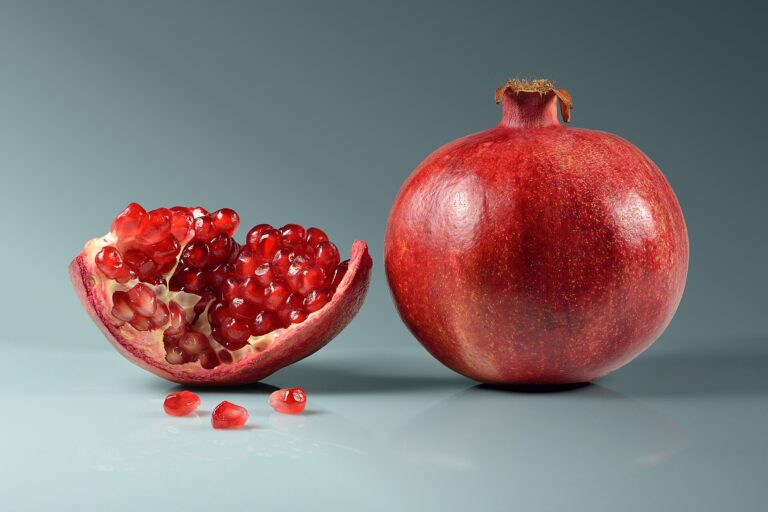
Pomegranate

Punica granatum · Loosestrife family (Lythraceae)

Hi, I'm Pomegranate! Open me up and find hundreds of shiny red jewels!

Pomegranate
Image: Ivar Leidus · CC BY-SA 4.0 · Wikimedia Commons

What does it help with?

  • Vitamins & good food

    The seeds give you fiber The chewy part of plants that helps your tummy and poop move well. and vitamins C and K.

    🟢 Scientists are sure

  • Heart & blood vessels

    In some tests, pomegranate juice made blood pressure go down a little in grown-ups.

    🟡 Scientists think so

What do the colored dots mean?
  • 🟢 Scientists are sure Strong evidence (several good human trials)
  • 🟡 Scientists think so Some evidence (small human studies)
  • 🟠 Still being studied Early evidence (lab or animal studies only)
  • 🔵 Grandma's wisdom Traditional use (not scientifically confirmed)

How we grade evidence

Careful if…

For kids OK in normal food Pills, powders & oils: ask a grown-up first

Pomegranate seeds are a great snack. Whole fruit is better than juice, which has less fibre. Little kids should eat the seeds sitting down.

  • Blood-pressure problems or medicines

    👀 Be careful

    People taking blood-pressure medicine can ask their doctor about drinking lots of pomegranate juice.

Natural does not always mean safe. Always ask a grown-up before trying something new, and a doctor or pharmacist before taking any supplement. Try the safety check →

What is it?

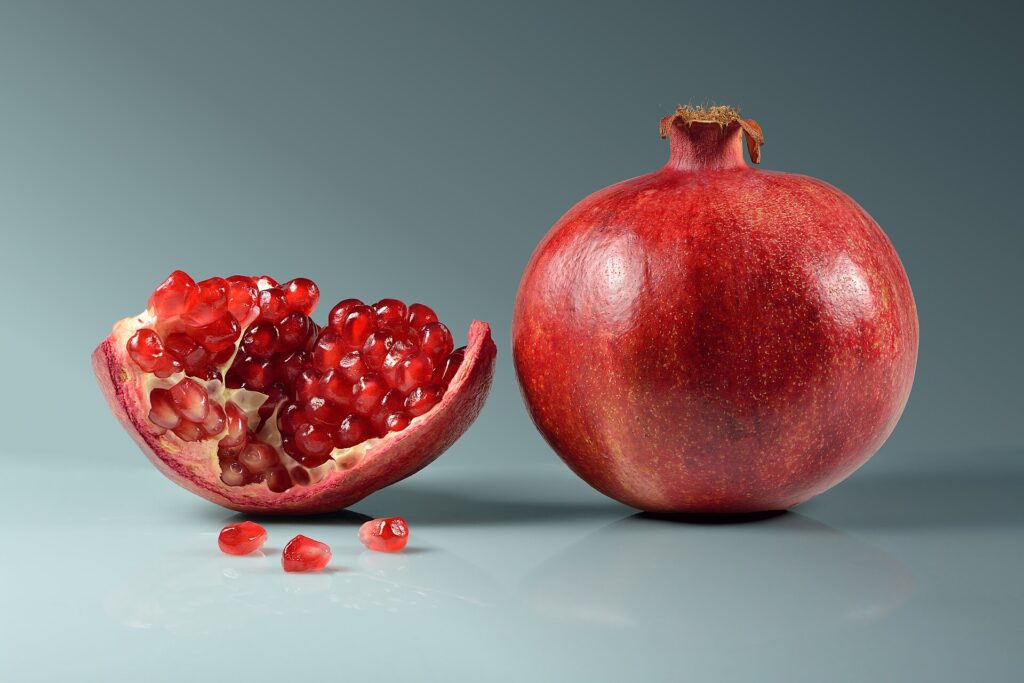
A pomegranate is a round fruit with a thick red skin. Inside are lots of small seeds. Each seed is wrapped in sweet, juicy red jelly.

The trees like warm, dry places, like Morocco. You can eat the seeds with a spoon, put them on salads, or make juice.

How people use it

In the kitchen

  • Seeds eaten with a spoon or sprinkled on salads.
  • Fresh juice and pomegranate syrup.

Traditional uses

🔵 Grandma's wisdom — not proven by science

  • A symbol of plenty and good luck in many cultures.

Home & garden

  • The peel was once used to dye wool and leather.

Fun facts

  1. One pomegranate can have hundreds of juicy seeds, called arils.

  2. Its name comes from Latin words meaning “apple with many seeds”.

  3. Pomegranate juice stains clothes bright red — wear an apron!

Grow it yourself

  • Medium
  • Lots of sun
  • Regular water
  • Grows in a pot
  • About 2 to 3 years for a young tree to give fruit
  1. Wash a few pomegranate seeds to remove the red jelly.
  2. Plant them just under the soil in a small pot.
  3. Keep the pot warm and sunny, and the soil a little damp.
  4. Move your little tree to a big pot as it grows.

Quiz time!

Answer 3 questions. Get 2 right to win this plant’s badge for your garden!

  1. What is inside a pomegranate?

  2. Which is healthier: whole pomegranate seeds or the juice?

  3. What should you wear when opening a pomegranate?

Your plant card

Print it, cut it out and collect them all!

Pomegranate

Punica granatum

Superpowers
Vitamins & good food Heart & blood vessels
Careful
Blood-pressure problems or medicines
Growing
⭐⭐

🤩 One pomegranate can have hundreds of juicy seeds, called arils.

supplementsmorocco.com

For grown-ups: science, amounts & safety

Tap to open

General information, not medical advice. Talk to a doctor or pharmacist before using any herbal supplement — especially during pregnancy or breastfeeding, for children, before surgery, or if you take medicines. Medical disclaimer

What the research says

Use Evidence Details
Vitamins & good food 🟢 Strong evidence (several good human trials) Per 100 g, raw pomegranate provides 83 kcal, 4 g fibre, 10.2 mg vitamin C, 16.4 µg vitamin K and 236 mg potassium[1].
Heart & blood vessels 🟡 Some evidence (small human studies) A 2023 meta-analysis of trials found pomegranate juice lowered blood pressure, especially at up to 300 mL a day, but the benefit disappeared after about 2 months of intake[2].

Who should be careful & interactions

  • 👀 Be careful Blood-pressure problems or medicines: Because pomegranate juice may lower blood pressure[2], people on antihypertensive medicines may want to monitor their blood pressure.

Nutrition (per 100 g of raw pomegranate seeds)[1]

Energy 83 kcal
Carbohydrates 18.7 g
Sugars 13.7 g
Fiber 4 g
Protein 1.7 g
Vitamin C 10.2 mg
Vitamin K 16.4 µg
Folate 38 µg
Potassium 236 mg

Names & identifiers

Scientific name
Punica granatum
Also called
Rumman
Wikidata
Q13188

Sources

  1. Pomegranates, raw (FDC ID 169134) USDA FoodData Central · Database
  2. Impact of pomegranate juice on blood pressure: A systematic review and meta-analysis Phytotherapy Research · 2023 · Research review · PubMed

✅ Reviewed by sm_owner on September 26, 2026.

Last updated September 25, 2026. How we write and check our pages

✏️ Suggest an edit

We only use this to improve the page. We never share it.