For kidsOK in normal foodPills, powders & oils: ask a grown-up first
Tomatoes are a great food for kids — raw in salads or cooked in sauces. Lycopene pills are not needed: eat the real tomato!
Heartburn & reflux
👀 Be careful
For some people, tomato sauce can cause a burning feeling in the chest.
Natural does not always mean safe. Always ask a grown-up before trying something new, and a doctor or pharmacist before taking any supplement. Try the safety check →
What is it?
A tomato is the juicy fruit of a leafy plant. It has seeds inside, so plant scientists call it a fruit. In the kitchen, we use it like a vegetable.
Tomatoes first came from South America. Today people put them in salads, sauces, soups and tagines all over the world.
How people use it
In the kitchen
Raw in salads, like Moroccan tomato-and-cucumber salad.
Cooked in sauces, soups, tagines and shakshuka.
Squeezed into juice or dried in the sun.
Home & garden
Cherry tomatoes grow well in pots on a sunny balcony.
Fun facts
1
Tomatoes are red because of lycopene The natural red colour in tomatoes and watermelon. It is an antioxidant.. Your body takes in more of it from cooked tomato sauce.
2
There are thousands of kinds of tomatoes: red, yellow, orange, purple and even striped!
3
Tomatoes are cousins of potatoes and aubergines. They are all in the same plant family.
4
A raw tomato is about 95% water. That's why it is so juicy!
Grow it yourself
⭐⭐ Medium
☀️ Lots of sun
💧💧 Regular water
🪴 Grows in a pot
⏳ About 2 to 3 months after planting a young plant
Get a young cherry tomato plant, or sow a few seeds in a small pot.
Plant it in a big pot in the sunniest spot you have.
Tie the stem to a stick so it can climb.
Water the soil, not the leaves, a little every day when it is hot.
Pick the tomatoes when they are red and a little soft.
💡 Only eat the ripe fruit. Tomato leaves and stems are for the plant, not for eating.
Quiz time!
Answer 3 questions. Get 2 right to win this plant’s badge for your garden!
For plant scientists, is a tomato a fruit or a vegetable?
It grows from the flower and has seeds inside, so it is a fruit — even if we cook it like a vegetable.
What gives tomatoes their red colour?
Lycopene is the natural red colour in tomatoes.
Can eating tomatoes replace sunscreen?
Tomatoes may help a tiny bit, but sunscreen, shade and a hat protect you much more.
🏅 You earned the Tomato badge!
Almost! Read the page again and retry — you can do it! 💪
🤩 Tomatoes are red because of lycopene. Your body takes in more of it from cooked tomato sauce.
For grown-ups: science, amounts & safety
Tap to open
General information, not medical advice. Talk to a doctor or pharmacist before using any herbal supplement — especially during pregnancy or breastfeeding, for children, before surgery, or if you take medicines. Medical disclaimer
What the research says
Use
Evidence
Details
Vitamins & good food
🟢 Strong evidence (several good human trials)
Per 100 g, raw ripe tomatoes provide about 18 kcal, 13.7 mg vitamin C, 237 mg potassium and 1.2 g fibre, with 94.5 g water[1].
Heart & blood vessels
🟡 Some evidence (small human studies)
In a meta-analysis of 21 intervention trials, tomato products lowered LDL cholesterol and improved blood-vessel function, and lycopene supplements lowered systolic blood pressure[2]. In observational studies, people with the highest lycopene intake or blood levels had a lower risk of stroke and cardiovascular disease — an association, not proof of cause[3].
Skin
🟡 Some evidence (small human studies)
A 2024 meta-analysis of 21 trials found that tomato and lycopene intake reduced UV-induced skin redness and some markers of photo-ageing[4]. This is modest internal protection and does not replace sunscreen.
Who should be careful & interactions
👀 Be carefulHeartburn & reflux:
Acidic foods such as tomatoes are commonly linked to reflux (GERD) symptoms; people who notice this can discuss reducing them with their doctor[5].

 Vegetables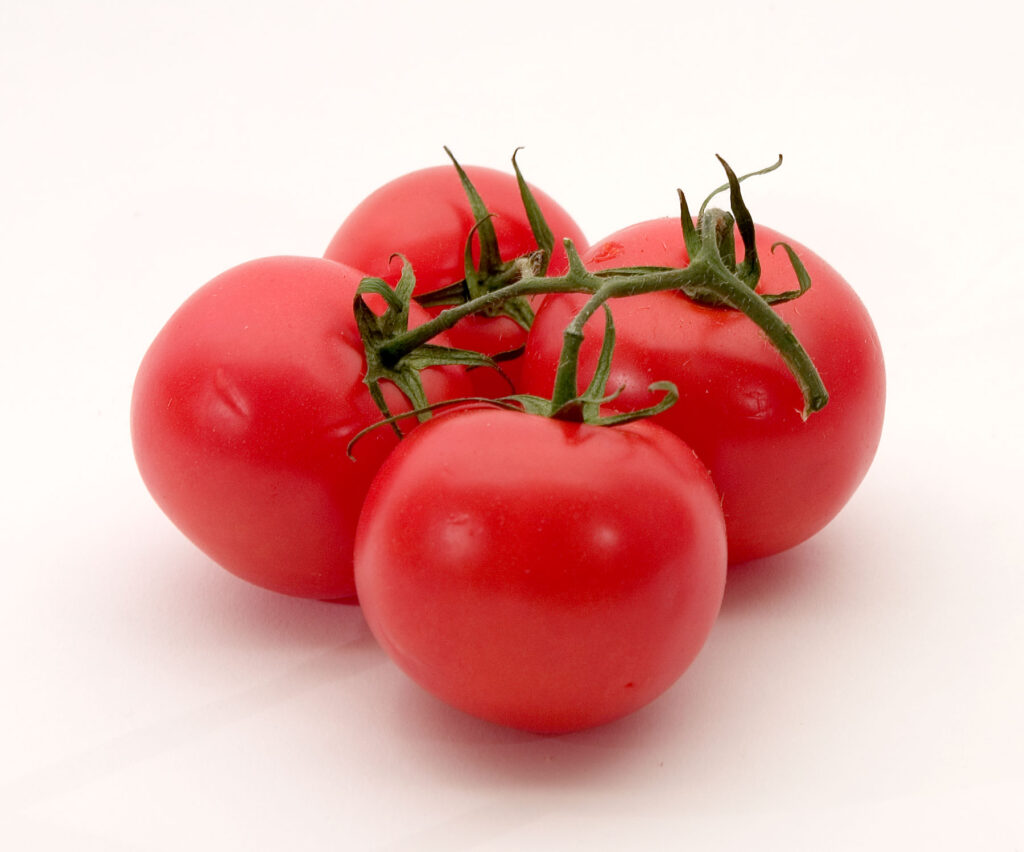


 Natural does not always mean safe. Always ask a grown-up before trying something new, and a doctor or pharmacist before taking any supplement.
 How people use it
 In the kitchen
 Home & garden
 Fun facts


 Vitamins & good food
 Heart & blood vessels
 Skin
Skin

